
Home EV charger installation: planning your setup
EV charging · EA1 Services · 21 September 2026
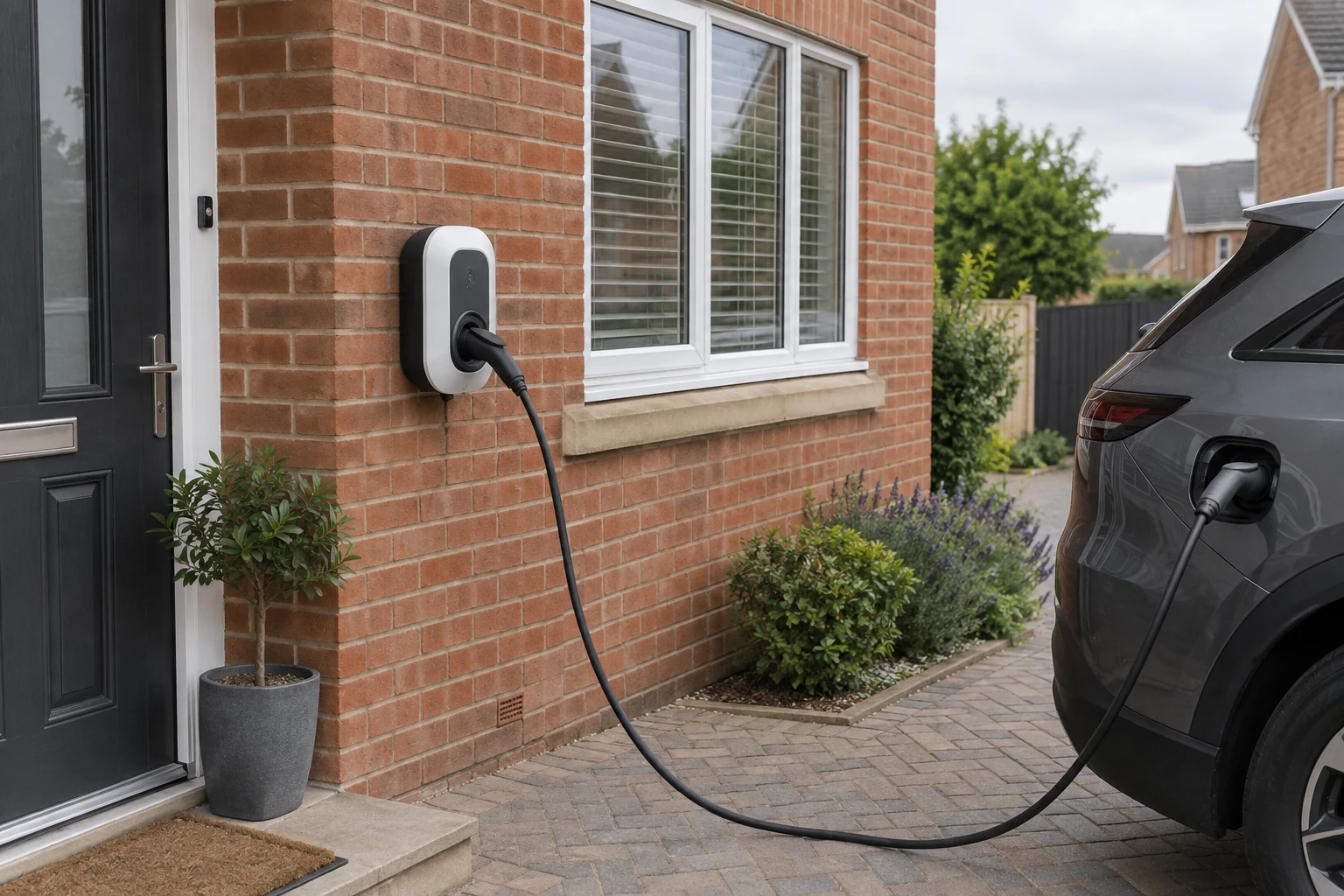
A home charger should fit the way you park and use your car. Before choosing a unit, consider its position, cable reach and the electrical assessment needed for your property.
Start with your parking space
Tell the installer where the car normally parks and where its charging connection is located. If more than one vehicle uses the space, consider whether their positions differ. Photographs showing the parking area and nearby walls are useful for an initial conversation.
Think about normal access around the car, gates and walking routes. A convenient-looking wall position may be awkward in everyday use if the cable has to cross the area people use to reach the front door. The final location and cable route should be agreed with the installer.
Choose around your routine
Consider when the car is normally at home, your typical driving pattern and whether you expect to change vehicles. Ask about tethered and untethered options and how the proposed charger works with your car. Check which controls rely on an app and what connectivity the equipment needs.
Energy Saving Trust explains the main charging options and the factors affecting charging time. A charger's advertised power is not a promise that every vehicle will charge at that rate. The car, charger and available supply all matter, so discuss the combination you will actually use.
Let the installation determine the scope
The installer needs to assess the property's electrical arrangements and the proposed cable route. Send any relevant electrical reports and explain where the consumer unit is located. Do not remove covers to take photographs. Mention any other major electrical work you are planning so the requirements can be considered together.
Ask what is included in the installation quote and what could require additional work. Cable routing, mounting arrangements and the condition of the existing installation can affect the proposal. If permissions or network arrangements apply, clarify who will handle them and when they need to be completed.
Plan the handover as well as the installation
Before the work, confirm parking access and any planned power interruption. At handover, ask for a demonstration of starting and stopping a charge, using schedules where supported and finding the equipment's user instructions. Keep the installation documents and warranty information together.
For home EV charger enquiries around Southend and Essex, send John the property postcode, vehicle details and a few photographs of the parking area. He can discuss the installation requirements and quote for the agreed work. Check current tariff and grant information separately before basing a budget on it, as eligibility and offers can change.
Further reading: Energy Saving Trust: charging electric vehicles
Explore ev charger installation
Discuss your electrical work